17 Aug Back to School: 10 Tips to Stay Organized, Save Time, and Build a Routine That Lasts
Posted at 18:58h
in Tips & tricks
Back-to-school season often means returning to a much busier reality: earlier mornings, lunches to pack, homework, extracurricular activities, work, workouts, appointments… and the feeling that there simply aren’t enough hours in the day!
After a summer with a more flexible schedule, getting back into a routine can take some adjustment. The good news? Being organized for back-to-school season doesn’t mean controlling every minute of your day. The goal is simply to put a few easy systems in place that save time and reduce your mental load.
Here are 10 practical tips to start the school year on the right foot.
Going from a relaxed summer schedule to a 6 a.m. wake-up overnight can be difficult for both kids and parents.
A few days before school starts, gradually move bedtime and wake-up time earlier. You can also bring back a few familiar habits, such as eating breakfast at a regular time, laying out clothes the night before, or creating a calmer wind-down period before bed.
The goal isn’t to have a perfect routine before the first day of school. It’s simply to make the transition a little smoother.
Between appointments, kids’ activities, school holidays, meetings, and personal commitments, it’s easy to forget something.
A shared calendar gives the whole family a clear overview of the week.
You can include:
A shared digital calendar works well, but a large calendar in the kitchen can be just as effective.
The best organizational tool is the one you’ll actually use.
A short planning session can prevent a lot of last-minute scrambling.
Every Sunday, take a few minutes to look at the week ahead. Which days will be busier? Is there an appointment? Soccer practice? An evening when you’ll be getting home later than usual?
From there, you can plan your meals, transportation, and priorities accordingly.
Those 15 minutes can save you much more time throughout the week.
Mornings are rarely the best time to search for a missing sweater, sign a school form, and figure out what to put in everyone’s lunchbox!
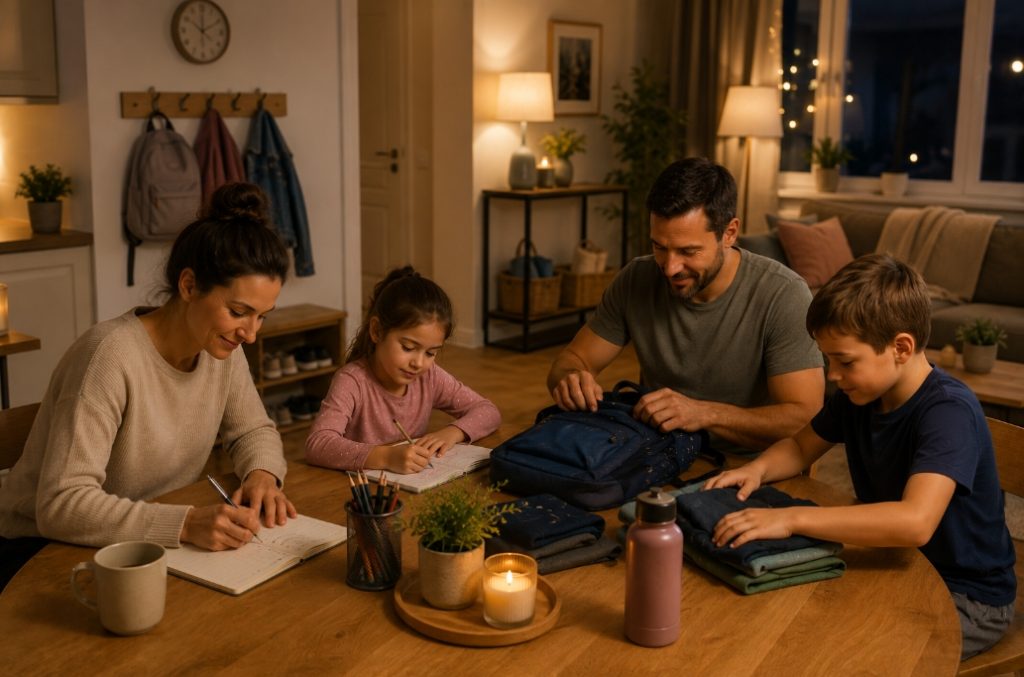
Try moving some of those decisions to the night before.
Lay out clothes, pack school bags, fill water bottles, and prepare anything that can already go into lunchboxes.
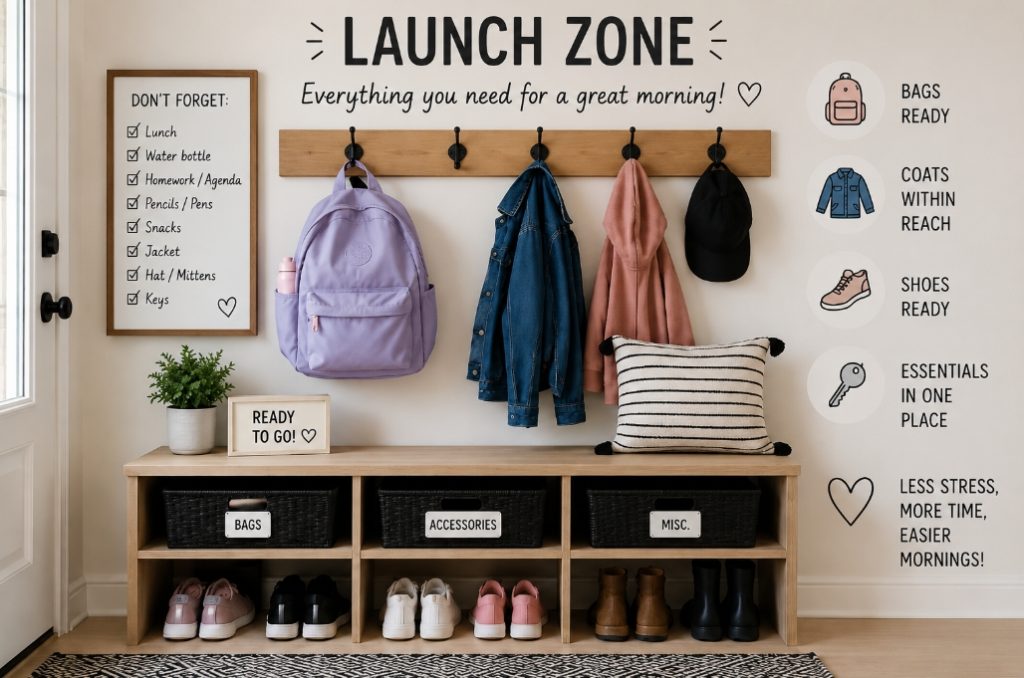
You can even create a small launch zone near the front door where you keep school bags, coats, shoes, and anything else that needs to leave the house the next morning.
The fewer decisions you have to make—and the fewer things you have to search for—in the morning, the smoother your routine will be.
You don’t need to cook seven completely different recipes every week.
Choose a few simple, versatile meals that the whole family enjoys. Think about ingredients that can be used in several different meals.
For example, chicken cooked ahead of time can be used in bowls, wraps, salads, or pasta dishes.
You can also prepare a few things in advance:
The goal isn’t necessarily to spend three hours meal prepping every Sunday. Even 30 minutes of preparation can make a big difference.
Some weeks simply won’t go according to plan.
Keep a list of 5 to 10 extremely quick meals you can make without much thought: eggs and toast, quesadillas, pasta with vegetables and protein, sandwiches with raw veggies, bowls made with ingredients you’ve already prepared, and so on.
It’s also helpful to keep a few convenient staples in the freezer and pantry.
Good organization isn’t just about preparing for the ideal scenario. It’s also about having a Plan B when the day doesn’t go as expected.
Doing small tasks throughout the day can make you feel constantly busy without actually getting much done.
Instead, try grouping similar tasks together.
For example, prepare several snacks at once, answer emails at specific times, do your grocery shopping once or twice a week instead of every day, and group appointments together whenever possible.
Every transition requires a little mental energy. Reducing those transitions can help you save time—and patience!
During back-to-school season, everyone else’s needs can quickly take priority over your own.
Your workout, your walk, your reading time, or simply 20 minutes to yourself can easily become the first things you sacrifice.
Try putting that time into your schedule just as you would an appointment.
You don’t need an hour of free time every day. A 20-minute walk or a 30-minute workout still counts.
Your routine needs to work for your real life—not for a perfect week that never actually happens.
New school year, new routine… and suddenly you want to cook every meal from scratch, wake up at 5 a.m., work out five times a week, keep the house spotless, and never be late again!
That’s often the perfect recipe for giving up quickly.
Instead, choose two or three priority habits for the first few weeks.
For example:
Once those habits start to feel more natural, you can add others.
An effective routine is built gradually.
The first version of your routine probably won’t be the final one—and that’s completely normal.
After two or three weeks, ask yourself:
What’s working well? What’s still creating stress? What could be simplified?
Maybe preparing lunches at night works perfectly, but cooking all your meals on Sunday leaves you exhausted. Maybe morning workouts are unrealistic, but exercising during your lunch break works beautifully.
A good routine isn’t rigid. It evolves with your reality.
Getting organized for back-to-school season shouldn’t become another source of pressure.
The goal isn’t to have a perfectly tidy home, Pinterest-worthy lunches, or a routine planned down to the minute. It’s about reducing the number of decisions you have to make every day and creating habits that make everyday life easier.
Start small. Automate what you can. Prepare what can be done ahead of time. And most importantly, give yourself a few weeks to find your rhythm.
Because at the end of the day, the best routine isn’t the one that looks perfect on paper—it’s the one you can actually maintain when real life happens.